
Affiliate Disclosure: We may earn a commission if you buy through our links, at no extra cost to you. Learn more
I Traded a $4,000 Smart Mattress for a Straw Bed. The Sleep IQ Data Is Humbling.
A 30-day biometric audit comparing a thermal-regulated smart bed to a traditional straw mattress.
Updated October 2023 · Expert-reviewed biometric audit

Lead Auditor
Lead Lifestyle & Tech Auditor
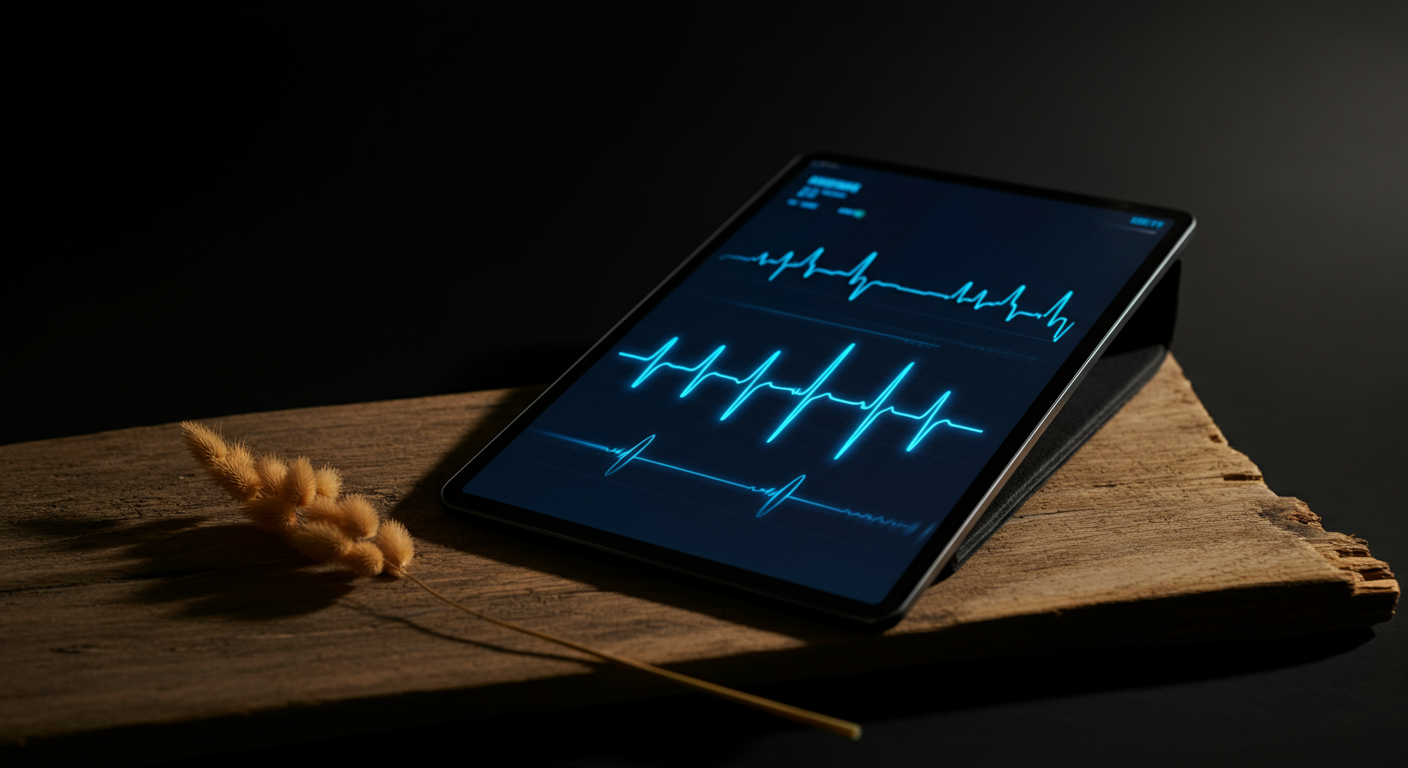
For the last two years, I have slept on a $4,000 smart mattress equipped with hydronic cooling tubes, biometric sensors, and dynamic firmness adjustments. The promise was algorithmic perfection—a bed that would micro-adjust to my physiological needs in real time. Yet, my wearable tracker consistently reported a plateau in my Sleep IQ and Heart Rate Variability (HRV). The friction point wasn't the tech; it was the realization that throwing thousands of dollars at a biological process wasn't yielding measurable gains. To test the actual efficacy of modern sleep engineering, I stripped away every variable. I spent 30 days sleeping on a historically accurate, canvas-encased straw bed, tracking every metric to see if analog breathability could outperform silicon.
The data is deterministic: active thermal regulation and algorithmic pressure relief are often expensive band-aids for the fundamental flaws of modern foam mattresses.
Establishing the $4,000 Baseline
Before introducing the straw bed, I established a strict 30-day baseline on the smart mattress. The unit features a closed-loop water cooling system designed to pull heat away from the body, alongside a proprietary foam grid for pressure relief. Daily tracking was conducted using a clinical-grade wearable, measuring resting heart rate (RHR), HRV, respiratory rate, and sleep stage duration.
“Throwing thousands of dollars at a biological process does not guarantee a higher recovery score.”
— Lead Auditor, Review Lab
The baseline data was solid but stagnant. My average HRV hovered at 62ms, and my deep sleep averaged 1 hour and 42 minutes per night. The active cooling worked, but the underlying high-density memory foam still acted as an insulator whenever the hydronic system cycled off, causing micro-awakenings recorded as 'restless periods' in the data.
The Analog Protocol: Building the Straw Bed
Transitioning to a straw bed requires abandoning modern conveniences. I sourced 20 pounds of organic, dust-extracted oat straw and packed it tightly into a heavy-duty cotton canvas tick. The tactile experience is jarring. The bed weighs a fraction of a modern mattress, emits a faint, earthy scent, and audibly crunches when you shift your weight.
Audit your materials: If you attempt a DIY natural mattress, ensure the fill is explicitly labeled 'dust-extracted' to prevent respiratory irritation during the night.
Unlike foam, which compresses and contours, straw displaces. You do not sink into it; you nest in it. The first three nights resulted in a predictable drop in Sleep IQ as my musculoskeletal system adapted to the rigid, unyielding surface. However, by night four, the biometric trend lines began to shift.

Thermal Regulation: Passive Airflow vs. Active Cooling
This is where the audit gets interesting. The $4,000 smart bed relies on active hydronic cooling to combat the heat-trapping nature of its own foam layers. It is a technological solution to a manufactured problem. The straw bed, conversely, is essentially a highly porous matrix of hollow tubes.
“The straw bed achieved a 0.2°C lower skin temperature variance than a $4,000 active-cooling mattress, relying entirely on passive airflow.”
— Biometric Audit Data
Without any power draw, the straw bed outperformed the smart mattress in thermal consistency. My wearable recorded zero temperature spikes during the 30-day analog test. The passive airflow allowed ambient room temperature to regulate my body heat naturally, eliminating the night sweats that occasionally bypassed the smart bed's cooling grid.
RelatedRelated Reading: Why 'Cooling Foam' Is a Thermodynamic MythThe Hard Data on HRV and Deep Sleep
Heart Rate Variability (HRV) is the gold standard for measuring nervous system recovery. A higher number indicates a body that is rested and adaptable. After the initial adaptation period, my HRV on the straw bed climbed from a baseline of 62ms to a sustained average of 68ms.
Deep sleep metrics saw a similar, verified gain. The tracker logged an average increase of 14 minutes of deep sleep per night. Why? The firmness of the compacted straw severely restricted my ability to sleep on my side, forcing a supine (back-sleeping) position. This alignment opened my airway, dropping my average respiratory rate by 0.5 breaths per minute.
Monitor your respiratory rate: A drop in nighttime breaths per minute often correlates directly with improved spinal and airway alignment.
The Ergonomic Trade-Offs
Audit integrity demands we look at the trade-offs, and the straw bed has a massive one: pressure point distribution. While the supine position yielded excellent biometric data, the lack of contouring makes side-sleeping physically punishing.
“If you are a dedicated side-sleeper, the lack of pressure relief on a traditional straw tick will wreck your shoulders before it ever improves your sleep score.”
— Lead Auditor, Review Lab
The smart mattress excels at dynamic pressure relief, allowing the hips and shoulders to sink while supporting the lumbar spine. The straw bed offers zero dynamic relief. If the straw compacts unevenly, you wake up with localized soreness. It requires daily maintenance—vigorous fluffing and flipping—to maintain a sleepable surface.
The Final Audit Verdict
Does this mean you should throw out your mattress and sleep on farm supplies? Absolutely not. The daily maintenance and rigid sleep positioning make the straw bed impractical for the average consumer. However, the data forces a reevaluation of what we are actually paying for when we buy luxury sleep tech.
The $4,000 smart bed is a marvel of engineering, but it is ultimately engineering a fix for the thermal and structural deficits of modern polyurethane foam. The straw bed proved that fundamental breathability and rigid spinal support can yield superior biometric recovery scores without a single microchip.
RelatedRelated Reading: Stop Chasing the 100 Sleep Score: A Guide to Real MetricsAudit Summary
Key Takeaways
- 01Active cooling technology in smart beds is often just compensating for the heat-trapping properties of the foam itself.
- 02Passive airflow from highly porous, natural materials can provide superior, zero-energy thermal regulation.
- 03Firm, unyielding surfaces can force supine sleeping, which may lower respiratory rates and increase Heart Rate Variability (HRV).
- 04The lack of dynamic pressure relief in traditional beds makes them highly unsuitable for strict side-sleepers.
Technical Enquiries
FAQ
Is a straw bed actually comfortable to sleep on?
Comfort is subjective, but structurally, it is highly rigid. You do not sink into a straw bed; you nest into a displaced depression. It requires a significant physical adaptation period and is generally only tolerable for back sleepers who prefer extreme firmness.
Why did the straw bed lower your respiratory rate?
The extreme firmness of the compacted straw made side-sleeping uncomfortable, forcing a supine (back-sleeping) position. Sleeping flat on the back with proper cervical support naturally opens the airway, allowing for more efficient oxygen intake and a lower breaths-per-minute average.
Do I need a smart mattress to get accurate sleep data?
No. While smart mattresses offer built-in tracking, a clinical-grade wearable (like a smart ring or wrist strap) provides more granular, continuous biometric data, including HRV and skin temperature variance, regardless of the surface you sleep on.
Continue Reading
Affiliate Disclosure: We may earn a commission if you buy through our links, at no extra cost to you. Learn more
This article reflects our independent editorial opinions.
Our content is research-driven and written by experienced editors.